

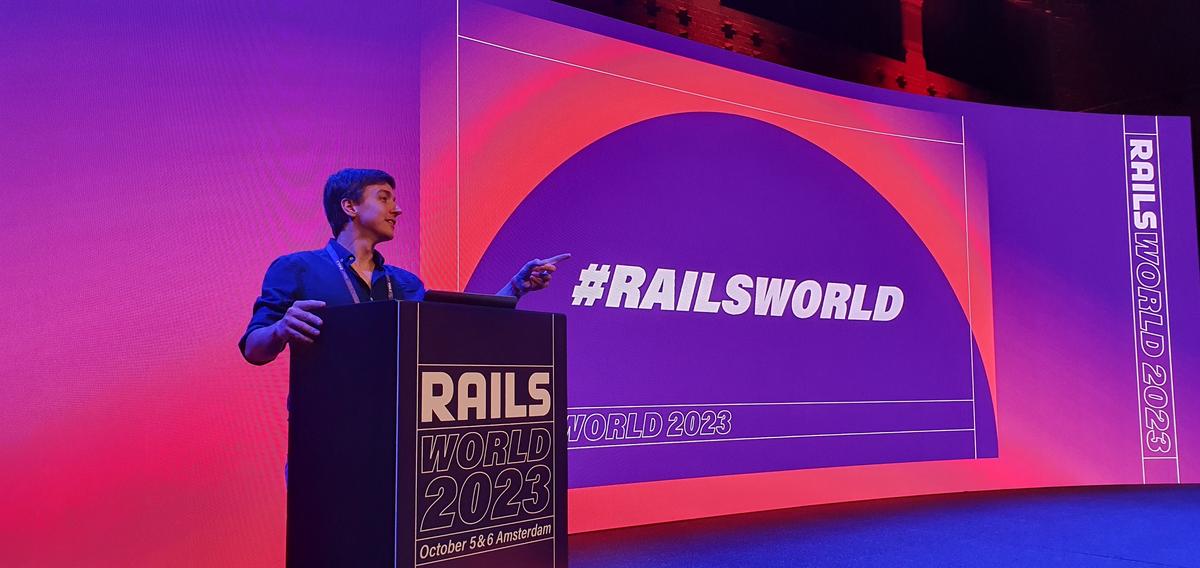
Why we still choose Rails at XAVER
Ruby on Rails remains one of the fastest ways to move from idea to a reliable product. At XAVER we’ve built dozens of apps with Rails and keep coming back to it because its conventions reduce boilerplate, its testing culture keeps code maintainable, and its ecosystem covers a huge range of real-world needs.
How XAVER uses Rails
We use Rails across the project lifecycle: rapid prototypes and MVPs to validate ideas, API backends for single-page and mobile clients, and full-featured platforms that need robust admin interfaces, background processing, and storage. Typical patterns we rely on:
- Service objects and clear boundaries to keep controllers thin and make AI or external integrations replaceable.
- Background jobs for long-running tasks such as model inference, batch processing, and async webhooks.
- ActionCable and streaming to surface partial or streaming responses to users while AI tasks run.
- ActiveStorage and attachment handling for media pipelines that feed models or store results.
- Test suites and CI to keep fast iteration safe as features and models evolve.
Rails and AI: practical fit, not hype
Rails is a good match for AI-enabled products because it manages the plumbing so teams can focus on modelling and UX. In practice at XAVER we integrate AI like this:
- Call external model APIs (OpenAI, Anthropic, private model endpoints) from well-tested service classes and push heavy work into background jobs so requests remain snappy.
- Cache model outputs and embeddings where appropriate to control costs and latency, and use job batching for bulk embedding or retraining tasks.
- Stream partial results to the client with ActionCable or server-sent events for better user experience when inferences take time.
- Store embeddings or use external vector stores to power semantic search and retrieval-augmented generation, keeping the retrieval layer separate from core business logic.
- Use Rails’ security, logging and testing tools to ensure model calls, data handling and user-facing outputs are auditable and controllable.
Recent Rails improvements (better performance, improved developer ergonomics and deployment tooling) make these patterns easier to run in production. For clients who need to move fast while keeping operational discipline, Rails remains a practical, reliable choice.
Bottom line: at XAVER we pick Rails because it gets teams shipping quickly, integrates smoothly with modern AI workflows, and scales from prototypes to production without forcing architectural rewrites.